
Furthermore
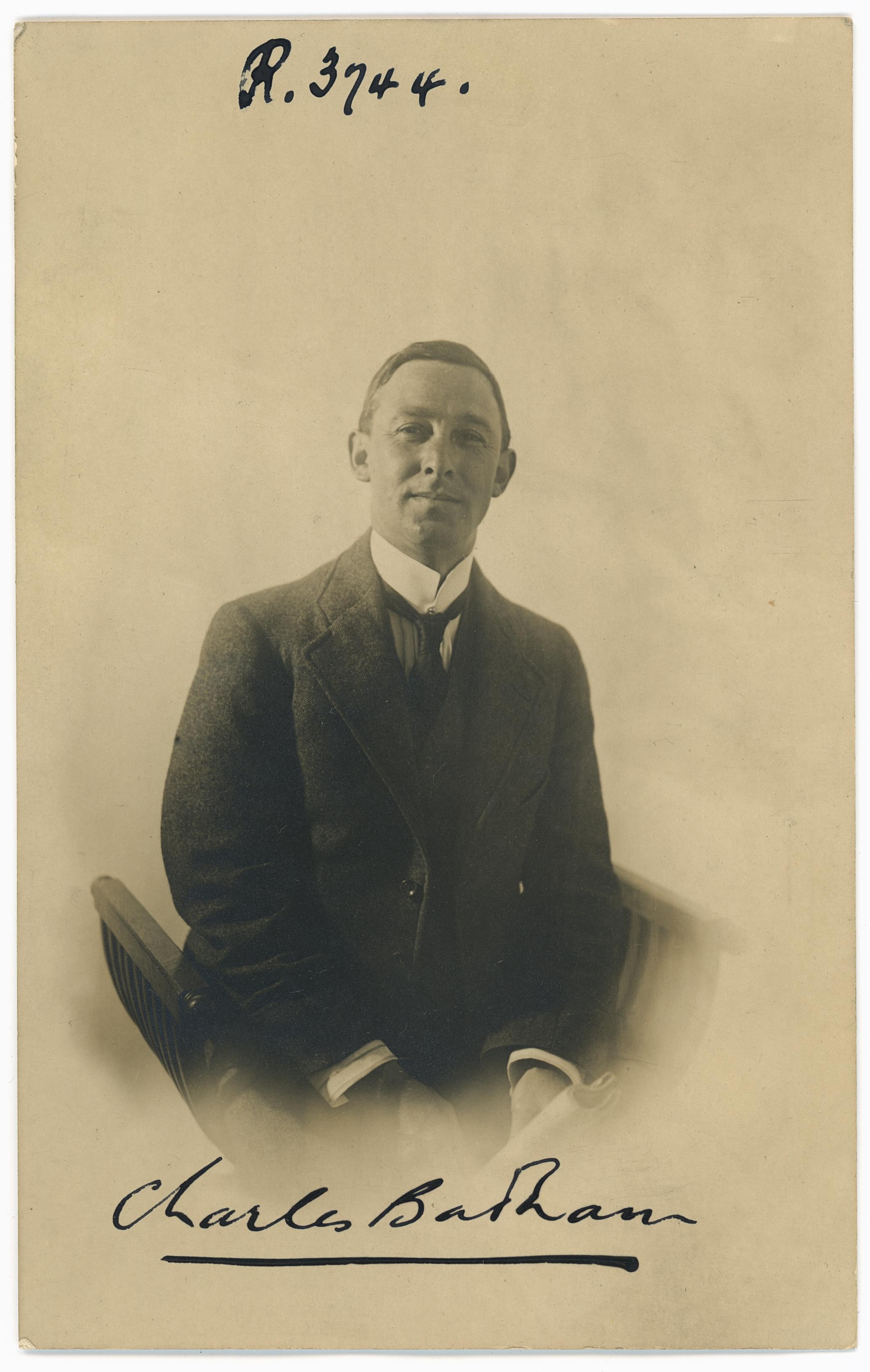
Badham's most significant research was on dust diseases of the lungs of workers in coal-mines and in sandstone tunnels, for which he received international recognition. He developed methods of dust sampling and did pathology examinations of miners' lungs and also animal experiments on the effect of injected and inhaled dusts. silica and carbon. Badham played an important role in introducing compensation for workers with dusted lungs in New South Wales. He was associate editor of the Journal of Industrial Hygiene and Toxicology. With H. B. Taylor, assistant government analyst, he showed that there was normally some lead excretion in the urine of Sydney residents and established the level. Lead was then the main industrial poison and Badham worked for regulations for its control, which were gazetted in 1928. He also reported on a sugar dust explosion, occupational dermatitis in rubber works and ventilation in wine cellars. From ADB entry
Book of Remembrance entry
M.B., Ch.M., B.Sc., D.P.H. : Captain, A.A.M.C., A.I.F., France. Enlisting 15th February, 1918, and sailing 8th May, served with No. 3 Australian General Hospital, Abbeville, from 11th September and 5th Australian Field Ambulance from 21st, being R.M.O. 18th Battn. from 29th December, 1918, to 17th January, 1919.
TIMELINE
-
1884Birth in Armidale -- NSW, Australia 15 March 1884
-
1913Tertiary education at University of Sydney, Camperdown, NSW, Australia 1913
-
1917Tertiary education at University of Sydney, Camperdown, NSW, Australia 1917
-
1918Enlisted 15 Feb 1918
-
?Military service as Captain at France --, France
-
1919Tertiary education at University of Sydney, Camperdown, NSW, Australia 1919
-
1920Medical Practitioner at Kendall -- NSW, Australia 1920
-
1920Medical Practitioner at Laurieton -- NSW, Australia 1920
-
1921Medical Officer at Sydney -- NSW, Australia 1921
-
1923Medical Officer for Industrial Hygiene at New South Wales -- NSW, Australia 1923
-
1926Tertiary education at University of Sydney, Camperdown, NSW, Australia 1926
-
?Resident Medical Officer at Camperdown -Royal Prince Alfred Hospital- NSW, Australia
-
1943Death in North Sydney -- NSW, Australia 6 August 1943
| Gender |
|
From the archives
![Portrait of Dr Charles Badham [ jpg ]](https://expert-nation.curated-collections.cloud.edu.au/files/medium/ace1d8fe041bf422adc7b8fcd6e21864f29eb406.jpg)
Unless otherwise noted, these photographs, War Service Records, letters, diaries and cards were sent to the University by family and friends during and after World War One. If you have any material to add, please see our contribute page.
×